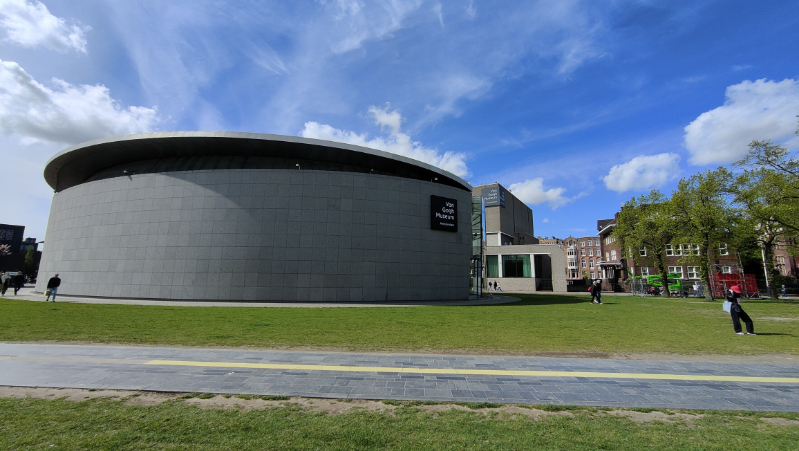
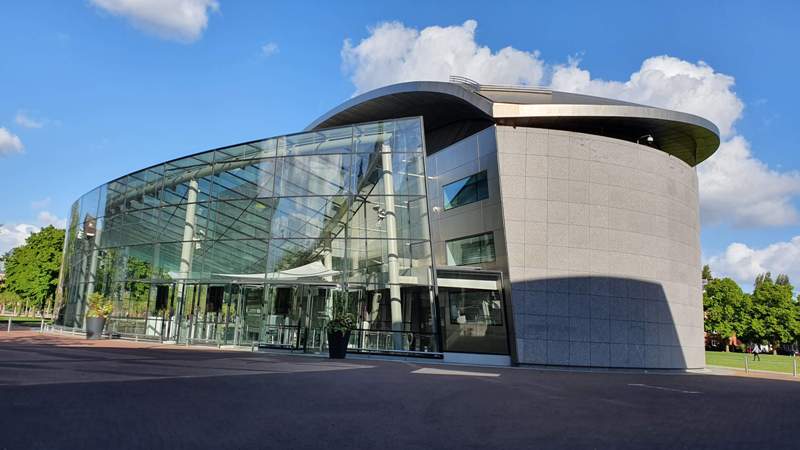
Located just a short walk from the Rijksmuseum on Amsterdam’s Museumplein, the Van Gogh Museum is entirely dedicated to the life and work of one of history’s most famous and complex artists. It houses the largest collection of Vincent van Gogh’s artworks in the world.
Here is a detailed description of the Van Gogh Museum:
Architecture and Design The museum is a striking blend of modernist and contemporary architecture, consisting of three main structural elements:
The Rietveld Building: Designed by the famous Dutch architect Gerrit Rietveld (a member of the De Stijl movement) and opened in 1973, this geometric, light-filled building serves as the main structure housing the permanent collection.
The Kurokawa Wing: Added in 1999 and designed by Japanese architect Kisho Kurokawa, this asymmetrical, elliptical wing is used for major temporary exhibitions.
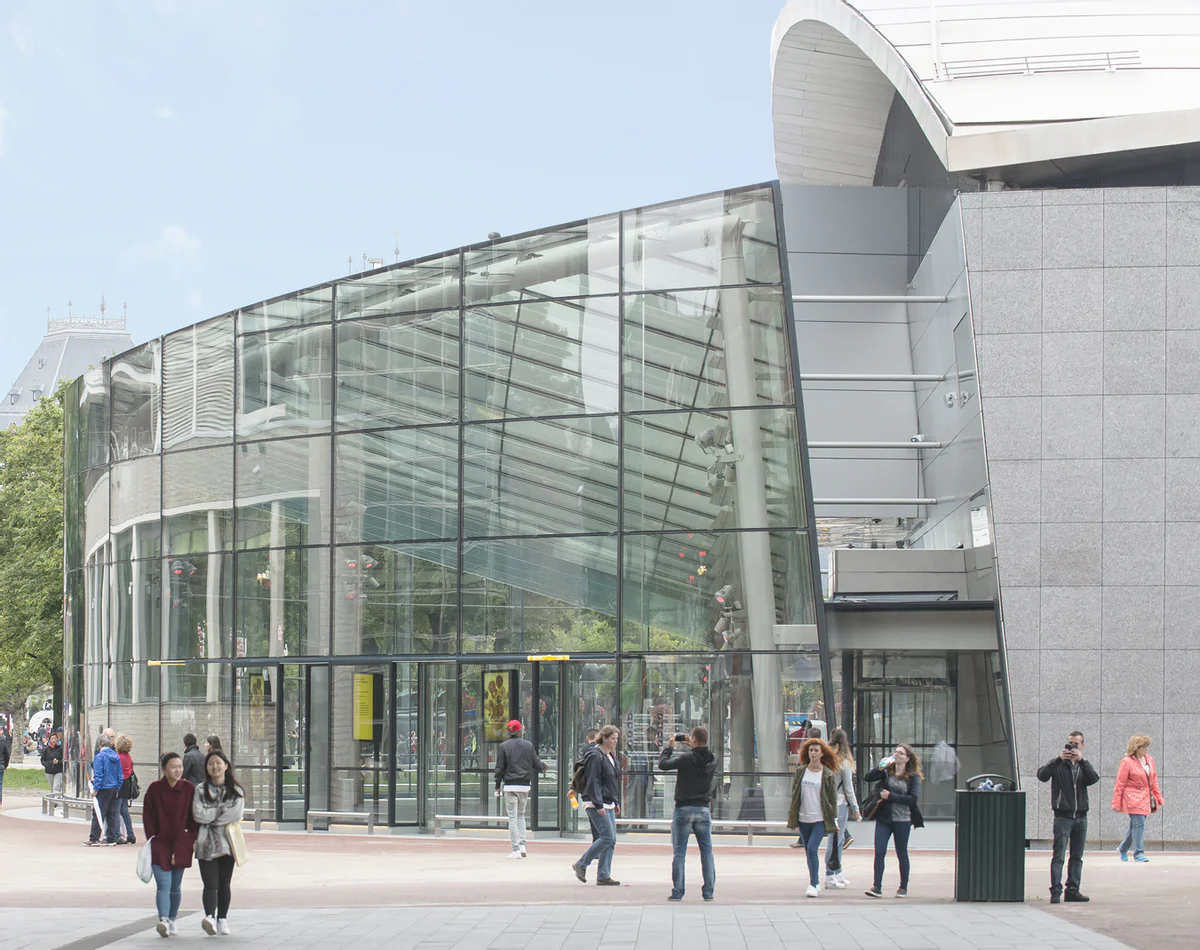
The Glass Entrance Hall: Opened in 2015, this stunning, state-of-the-art glass structure connects the Rietveld and Kurokawa buildings. With its curved glass walls and massive glass roof, it creates a transparent, modern entry point right on Museumplein.
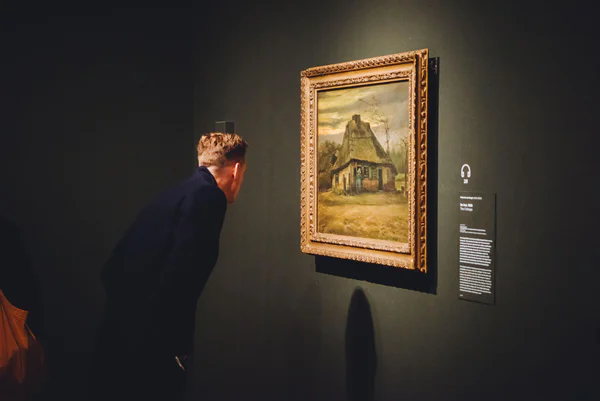
The Collection The museum holds a staggering permanent collection that includes over 200 paintings, 500 drawings, and more than 750 personal letters written by Van Gogh.
The primary exhibition is uniquely arranged chronologically across the floors of the Rietveld Building, allowing visitors to walk through the different phases of Van Gogh’s emotional life and artistic development:
The Dutch Period (Early Works): The journey begins with his early years in the Netherlands, characterized by dark, earthy tones and a focus on peasant life. The most famous masterpiece from this era on display is “The Potato Eaters” (1885).
The Paris Period: As he moved to Paris and encountered the Impressionists, his palette exploded with color. This section showcases his experimentation with lighter tones and different brushstrokes, featuring numerous self-portraits.
The Arles Period: Moving to the South of France, Van Gogh entered his most productive and iconic phase. The museum houses his globally recognized masterpieces from this time, including “Sunflowers” (1889), “The Yellow House”, and “The Bedroom”.
Saint-Rémy and Auvers-sur-Oise (Final Years): The later galleries explore his time in a psychiatric hospital and his final months. Key works here include the beautiful, hopeful “Almond Blossom” (1890)—painted as a gift for his newborn nephew—and the haunting, intense “Wheatfield with Crows” (1890).
Beyond the Canvas: Letters and Contemporaries What sets the Van Gogh Museum apart is its deep dive into the man behind the canvas. The extensive collection of letters, primarily written to his supportive brother, Theo, provides unparalleled insight into Vincent’s thoughts, ambitions, and struggles.
Additionally, the museum features works by Van Gogh’s friends, inspirations, and contemporaries, including Paul Gauguin, Claude Monet, and Henri de Toulouse-Lautrec, placing Vincent’s work within the broader context of 19th-century art history.
To provide the best experiences, we use technologies like cookies to store and/or access device information. Consenting to these technologies will allow us to process data such as browsing behavior or unique IDs on this site. Not consenting or withdrawing consent, may adversely affect certain features and functions.
Functional
Always active
The technical storage or access is strictly necessary for the legitimate purpose of enabling the use of a specific service explicitly requested by the subscriber or user, or for the sole purpose of carrying out the transmission of a communication over an electronic communications network.
Preferences
The technical storage or access is necessary for the legitimate purpose of storing preferences that are not requested by the subscriber or user.
Statistics
The technical storage or access that is used exclusively for statistical purposes.The technical storage or access that is used exclusively for anonymous statistical purposes. Without a subpoena, voluntary compliance on the part of your Internet Service Provider, or additional records from a third party, information stored or retrieved for this purpose alone cannot usually be used to identify you.
Marketing
The technical storage or access is required to create user profiles to send advertising, or to track the user on a website or across several websites for similar marketing purposes.
To provide the best experiences, we use technologies like cookies to store and/or access device information. Consenting to these technologies will allow us to process data such as browsing behavior or unique IDs on this site. Not consenting or withdrawing consent, may adversely affect certain features and functions.
Functional
Always active
The technical storage or access is strictly necessary for the legitimate purpose of enabling the use of a specific service explicitly requested by the subscriber or user, or for the sole purpose of carrying out the transmission of a communication over an electronic communications network.
Preferences
The technical storage or access is necessary for the legitimate purpose of storing preferences that are not requested by the subscriber or user.
Statistics
The technical storage or access that is used exclusively for statistical purposes.The technical storage or access that is used exclusively for anonymous statistical purposes. Without a subpoena, voluntary compliance on the part of your Internet Service Provider, or additional records from a third party, information stored or retrieved for this purpose alone cannot usually be used to identify you.
Marketing
The technical storage or access is required to create user profiles to send advertising, or to track the user on a website or across several websites for similar marketing purposes.