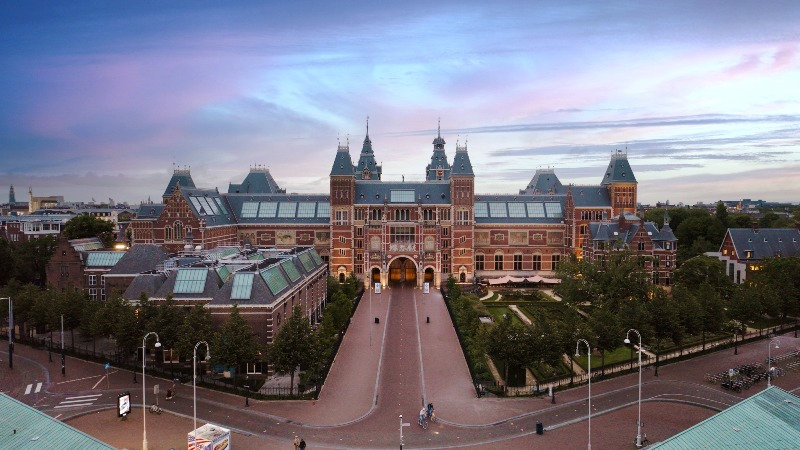
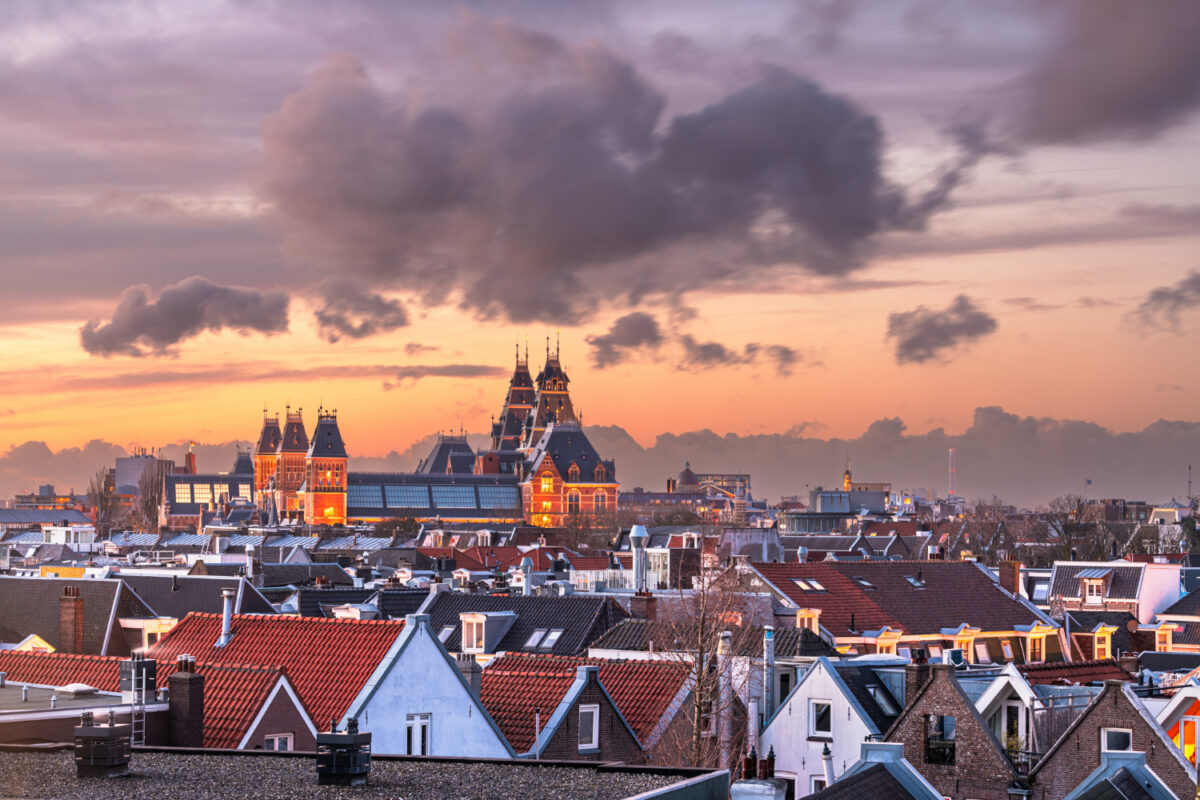
The Rijksmuseum, located on Museumplein (Museum Square) in Amsterdam, is the national museum of the Netherlands and one of the most famous cultural institutions in the world. It is dedicated to Dutch art, craft, and history, telling the story of 800 years of the Netherlands from the Middle Ages to the modern era (the years 1200 to 2000).
Here is a detailed description of the Rijksmuseum:
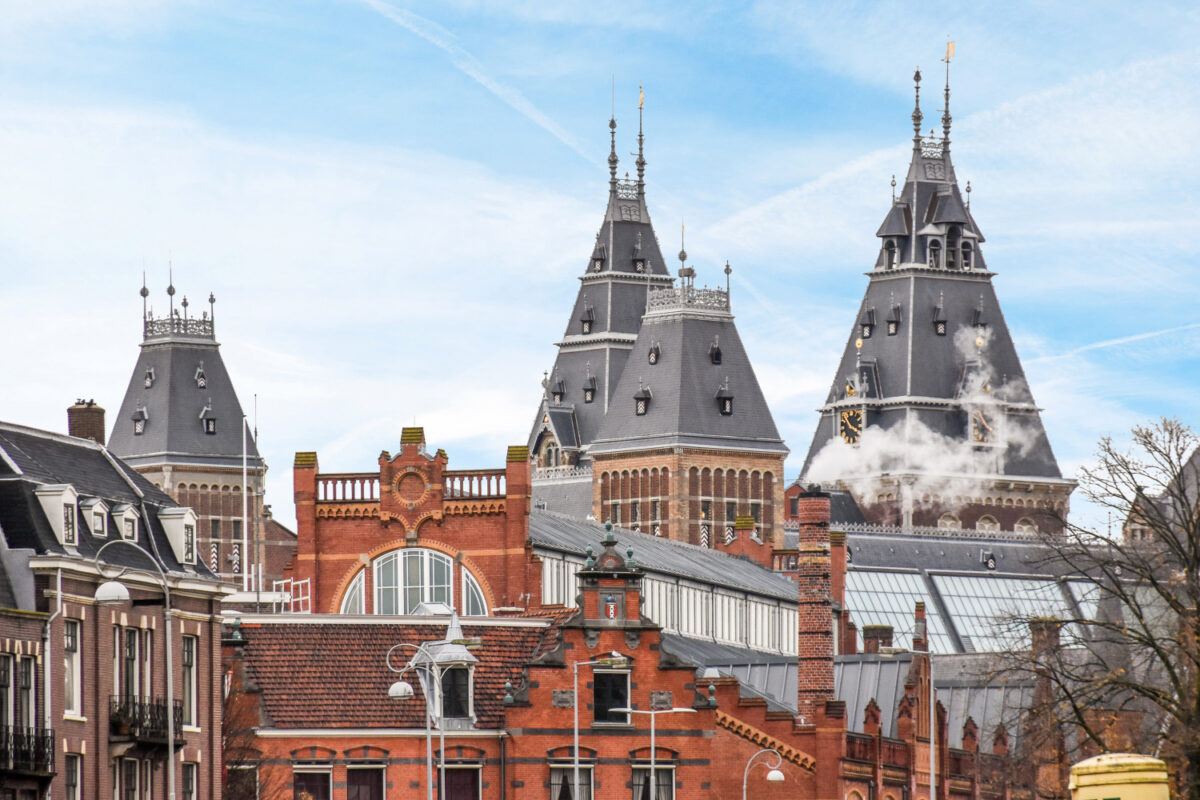
Architecture and Design The current main building, which opened to the public in 1885, was designed by renowned Dutch architect Pierre Cuypers. The monumental structure is a masterpiece in itself, blending Neo-Gothic and Renaissance Revival architectural styles. It resembles a grand historical palace or cathedral, featuring intricate red brickwork, elaborate stone carvings, arched windows, and stunning stained glass. Cuypers designed the building to tell a story through architecture, heavily utilizing national symbolism. The interior is centered around multiple grand courtyards and a soaring central hall, with the famous Gallery of Honour occupying the central axis on the first floor.
The Collection While the museum holds a total collection of around one million objects, it typically has about 8,000 works on display at any given time. The museum is most famous for its unparalleled collection of masterpieces from the Dutch Golden Age (the 17th century).
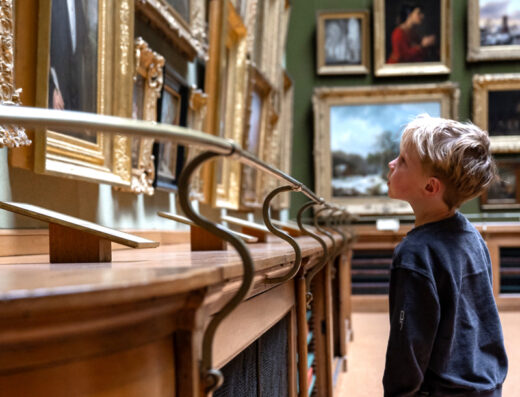
Notable Masterpieces and Artists The heart of the Rijksmuseum is the Gallery of Honour, a long, soaring corridor lined with alcoves that house the “best of the best” of the museum’s collection.
-
Rembrandt van Rijn: The museum holds the world’s largest collection of Rembrandt paintings. The undisputed crown jewel of the Rijksmuseum is Rembrandt’s masterpiece, “The Night Watch” (1642), a massive, dynamic militia portrait that commands its own dedicated gallery at the very end of the Gallery of Honour. Other significant Rembrandt works include “The Jewish Bride” and various self-portraits.
-
Johannes Vermeer: The museum is home to several of Vermeer’s rare, intimate, and masterful depictions of 17th-century domestic life, most notably “The Milkmaid”.
-
Other Dutch Masters: The galleries are filled with iconic works by painters such as Frans Hals, Jan Steen (known for his lively, chaotic scenes like “The Merry Family”), Jacob van Ruisdael, and still-life masters like Pieter Claesz.
-
Vincent van Gogh: Moving past the Golden Age, the museum also houses works by Vincent van Gogh, including a famous self-portrait.
Beyond the Canvas: Historical Artifacts The Rijksmuseum is not solely an art gallery; it is deeply rooted in Dutch history. Alongside the paintings, visitors can explore:
-
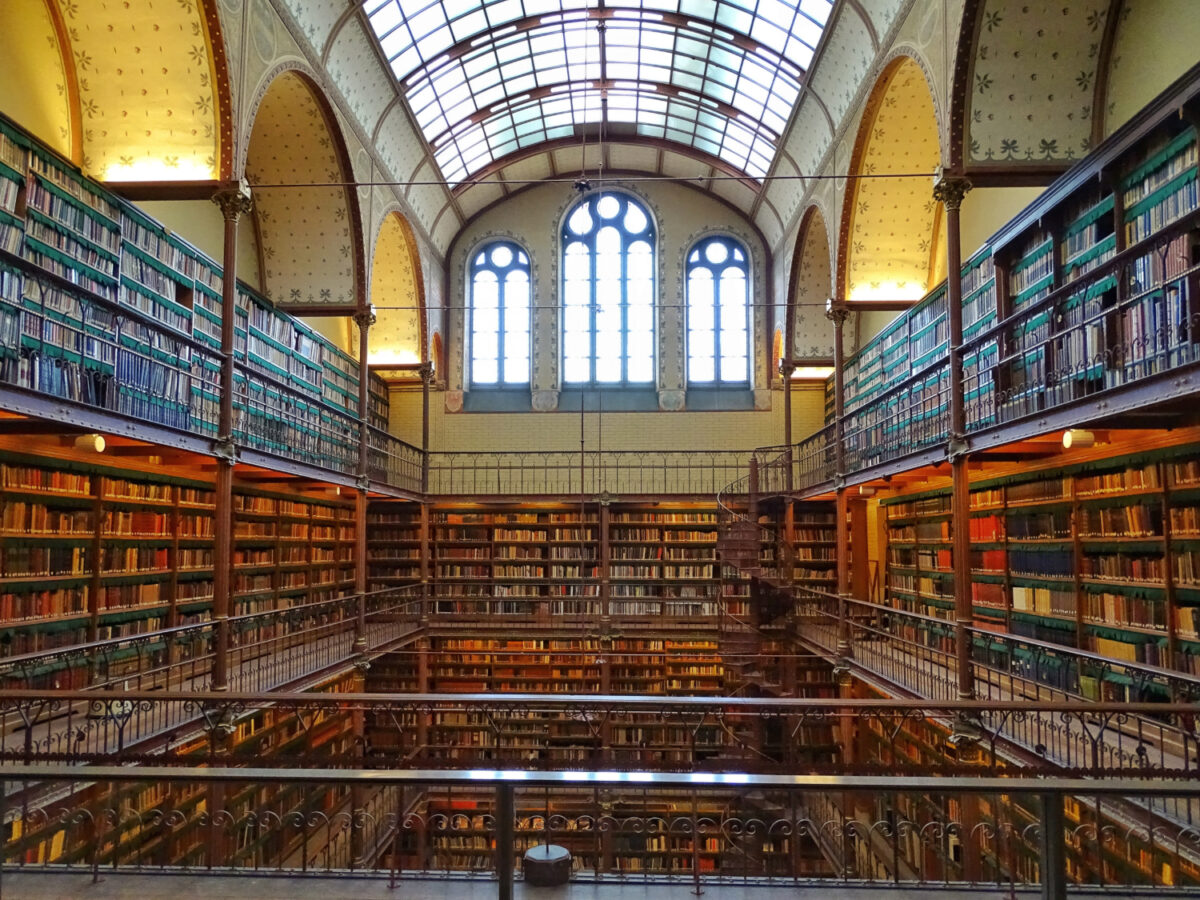
The Cuypers Library: The largest and oldest art historical library in the Netherlands. Its stunning, multi-tiered 19th-century reading room is often considered one of the most beautiful libraries in the world.
-
Historical Objects: The collection includes intricate 17th-century dollhouses (like the famous Dolls’ House of Petronella Oortman, which provides a meticulously detailed look at domestic life), opulent Delftware pottery, and elaborate furniture.
-
Maritime History: Impressive, highly detailed model ships, such as the “William Rex,” and artifacts representing the Netherlands’ naval and colonial history, including items from the Dutch East India Company.
-
The Asian Pavilion: A dedicated space featuring a small but exquisite collection of Asian art and artifacts, surrounded by water.
Today, the Rijksmuseum stands as a cultural giant, masterfully blending its rich, historic architecture with modernized, brightly lit galleries to showcase the pinnacle of Dutch artistic and historical achievement.
Lorem ipsum dolor sit amet, consectetur adipiscing elit. Ut elit tellus, luctus nec ullamcorper mattis, pulvinar dapibus leo.